NeuroΣky team
Welcome to the NeuroΣky team
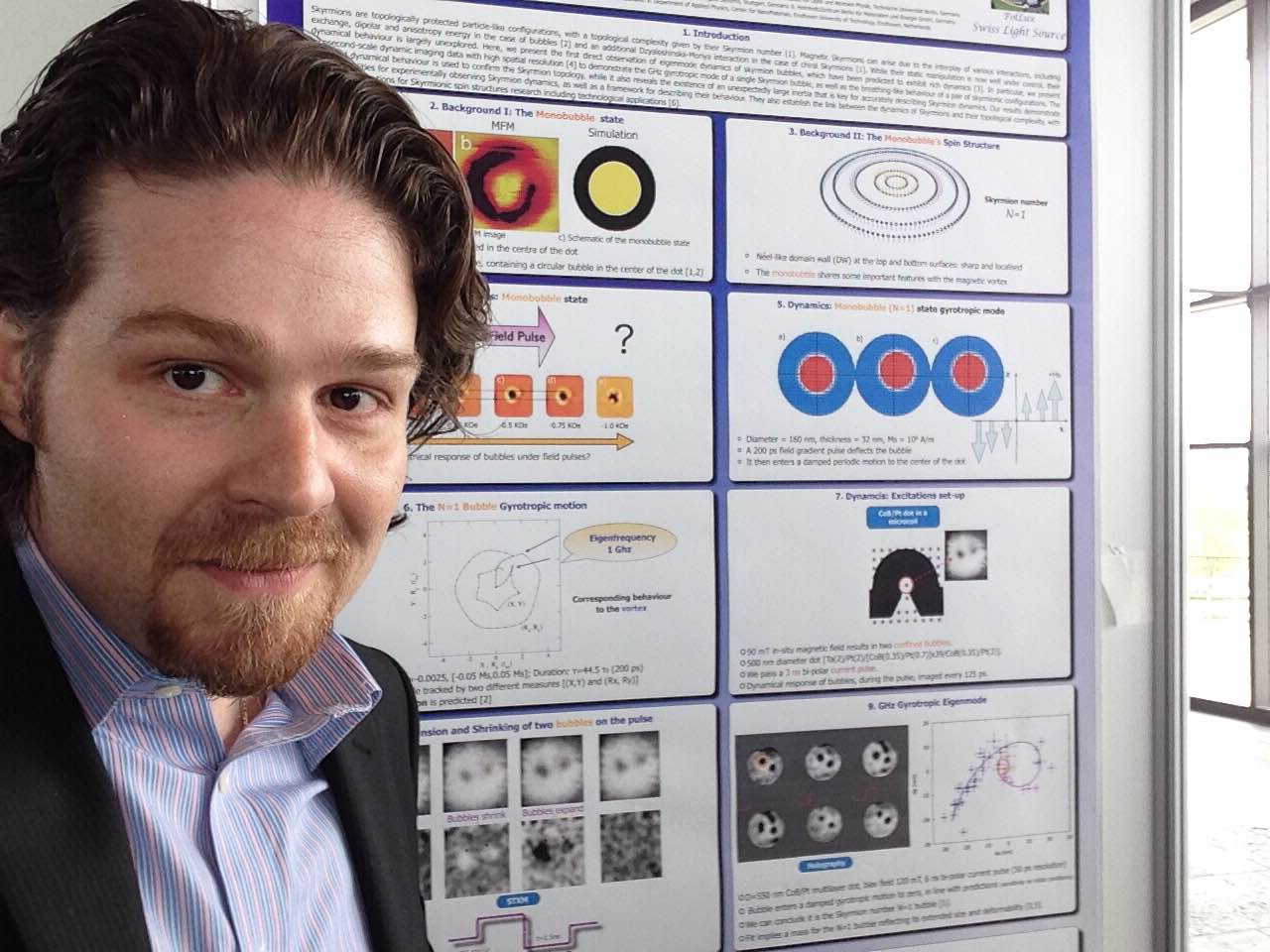
Christoforos. Moutafis, Reader in Spintronics, Leading the NeuroΣky team, Nano Engineering & Spintronic Technologies group, Department of Computer Science, University of Manchester, Oxford Road, Manchester, M13 9PL, UK, Tel: +441613066629
Our research bridges fundamental physics and technological innovation, combining spintronics, topology, and nanomagnetism with the development of next-generation hardware for AI and intelligent computing. Our main scientific interests encompass nanomagnetism and topology, magnetic skyrmions, spin-orbit coupling effects, skyrmion-based devices, and X-ray imaging. We explore the rich physics of skyrmions and their technological applications (“Skyrmionics”), Spin-Orbit Coupling effects (“Spin-orbitronics”), and the broader field of Spintronics. At the same time, we focus on advancing unconventional computing by investigating nanocomputing and neuromorphic computing, aiming to develop novel paradigms for intelligent computing.
Some of our contributions include the observation of skyrmion bubble states and topologically trivial states and predictions on the dynamics of skyrmionic configurations, the demonstration of the gigahertz eigenmode dynamics of skyrmion bubbles and their unexpectedly large inertia and the observation of nanoscale skyrmions at room temperature. We recently proposed a nanoscale room-temperature multilayer skyrmionic synapse for deep spiking neural networks.


☆Team Members
Research Associates
- Dr. Will Griggs
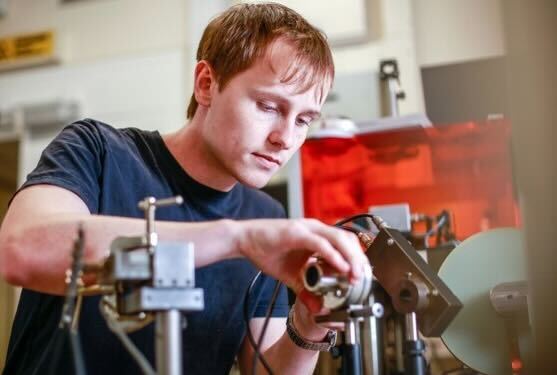 Will is a DKO Fellow. He is an experimentalist whose work focuses on skyrmionic systems for brain-inspired computing. In particular, he is working to build nanoscale artificial synapses which use skyrmions as information carriers, paving the way towards high-performance machine learning applications with extremely low power budgets. Will uses a diverse range of experimental techniques for the fabrication and characterisation of nanoscale devices, including magnetron sputtering, photo- and e-beam lithography, X-ray diffraction/reflectometry, vibrating sample/SQUID/MOKE magnetometry, scanning probe microscopy, ferromagnetic resonance, and polarised neutron reflectometry. He received his PhD from the University of Manchester in 2020 working on interfacial engineering in thin-film composite multiferroics. Will is working on the Skyrmionics for Neuromorphic Technologies project.
- Dr. Christopher Anderson

Chris’ research is in skyrmionic device simulation and transport characterisation for brain-inspired computing in the NanoΣky Team. He also works on low power, low latency neuromorphic processing in the Advanced Processor Technologies Group at the University of Manchester. He has researched graphene spintronics and been awarded a PhD in Condensed Matter Physics by the University of Manchester and an EPSRC Doctoral Prize Fellowship. He is particularly interested in the potential application of this research to fast, power efficient digital logic and neuromorphic processing. Chris is an experienced and PhD qualified embedded systems and functional safety consultant with comprehensive experience of safety and non-safety systems. He has extensively supported the Office for Nuclear Regulation’s (ONR) Generic Design Assessment (GDA) of the potential new UK nuclear reactors. Chris has provided software and hardware (inc. a special interest in FPGA) design, development and assessment capabilities and project management to a wide range of projects in Nuclear, Aerospace, Defence, Naval, Rail, Automotive, Datacomms, Telecoms and Scientific Research. He has managed diverse engineering teams including systems architects, software and hardware engineers, and has been Corporate Design Authority for a defence and aerospace specialist organisation. Chris has managed his own successful engineering consultancy. Recently he led a University of Manchester team supporting the Office of Gas and Electricity Markets’ (Ofgem) AI policy and published on robotics and AI in the nuclear industry.
PhD students
We are not currently recruiting,
☆ Former Team Members – PhD students and Research Associates
- Dr. Yu Li
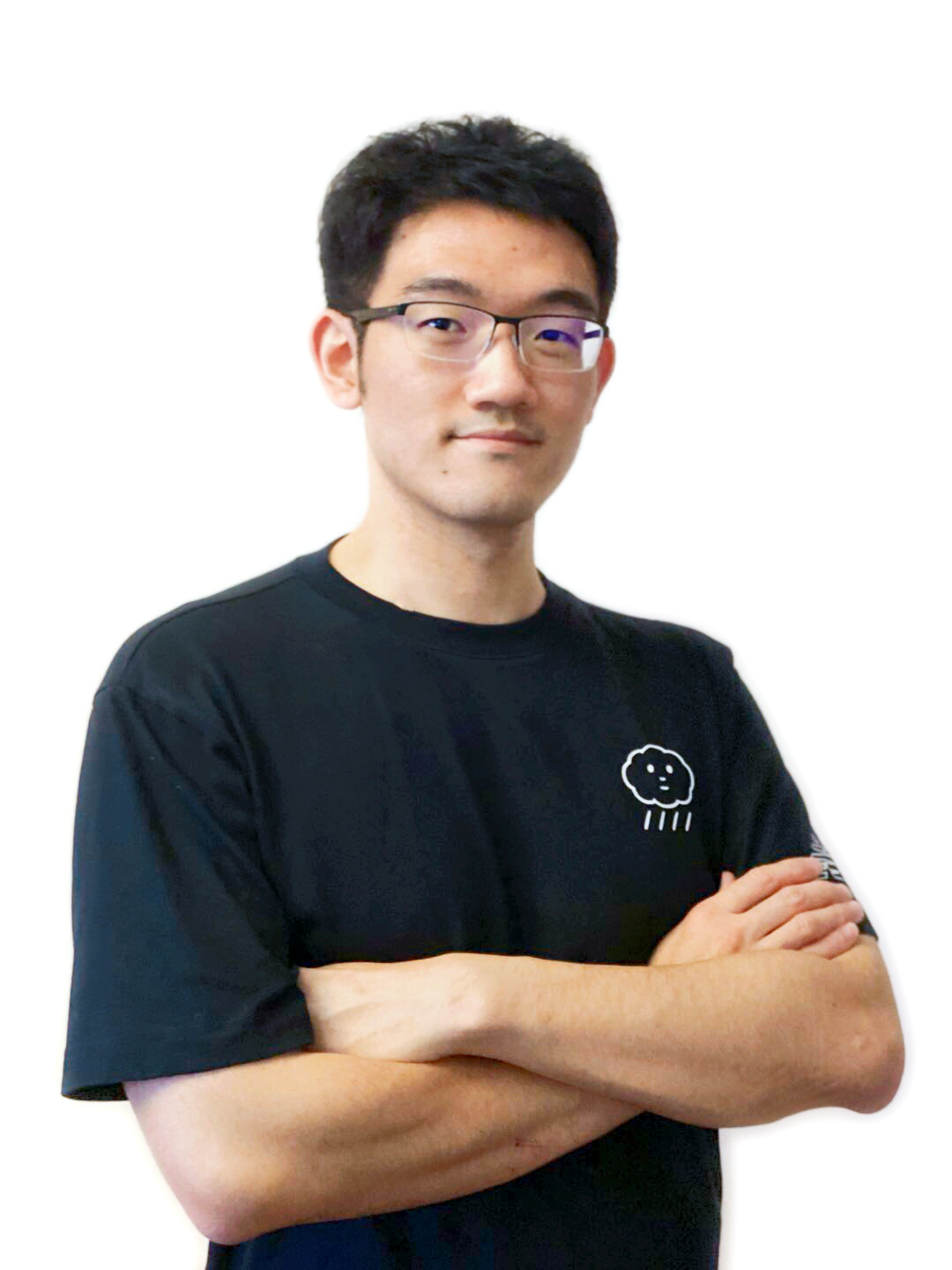 Previously a PhD student in NEST Group, Department of Computer Science, and my project was supervised by Dr. Christoforos Moutafis, and Prof. Jim Miles.
My recent research interests lie in the theoretical&computational studies of magnetic skyrmions, and vary between many topics, e.g. skyrmion/antiskyrmion switching in chiral magnets, 3D dynamics and the energy landscapes of switching processes, roughness effect on the stability of skyrmionic textures in multilayer structures, ferromagnetic resonance, skyrmion-based devices, etc. I’m also having board collaborations with many people working on experiments, including people in our NEST group @Manchester, ETH Zurich, and Paul Scherrer Institute (PSI).



- Dr. Yuzhe Zang
PhD student in Computer Science at the University of Manchester
Supervisor: Dr. Christoforos Moutafis
Co-supervisor: Prof. Tom Thomson
Yuzhe’s research interests are centred around behaviours of skyrmions in multilayer thin films and confined nanosturctures. Currently, Yuzhe is looking for a more energy-efficient method to manipulate skyrmions, assisting further development of skyrmion-based neuromorphic devices. Yuzhe employs both experimental and simulation methods to study skyrmions in multilayers and nanostructures. This includes: multilayer thin film engineering, in which sub-nanometre Co layers were deposited and characterised; fabrication and characterisation of multilayer nanodots arrays with the smallest diameter down to 200 nm; micromagnetic simulation of evolution of magnetic skyrmions and domains in thin films and nanostructures.
 Skyrmionics